The Rise, Plateau, and Pivot of Digital Cameras: What Went Wrong? (and What’s Next for Digital Cameras?)

There was a time—not long ago—when carrying a digital camera made you feel powerful. Professional. Ready to capture anything from a mountain sunrise to a wedding kiss in cinematic glory. A chunky camera around your neck meant something. It was a badge of artistry.

And then… it wasn’t.

Smartphones got smarter. Social media made fast content king. And that once-revered Digital Camera? Left behind.

Now in 2025, the digital camera industry is at a crossroads. Some brands are thriving. Others are bleeding. But it’s clear: we’re no longer in the golden age of casual camera ownership.

Still, this isn’t a eulogy. It’s a pivot. Because cameras are evolving—just in ways no one expected.


The Golden Era: 2005–2015

This decade was a dream for camera lovers. DSLRs became affordable. Mirrorless was the rising challenger. And the gear wars began.

  • Canon Rebel series brought pro-looking photos to the masses.
  • Nikon D90 became a cult classic.
  • Sony’s early mirrorless line quietly rewrote the rules.
  • YouTube creators flocked to Canon 80D, GH5, and Sony A7 bodies.

Photography was no longer just for professionals. Everyone wanted bokeh. Everyone talked about lenses. Even entry-level cameras produced stunning results—and camera shops thrived.

But in the background, a threat was growing in your pocket.


The Plateau: 2016–2020

Smartphones began eating the industry alive.

Every year, your iPhone or Galaxy got better at computational photography:

  • Portrait mode mimicked depth of field.
  • Night mode saw in the dark.
  • HDR balanced impossible lighting.

Suddenly, a $1,000 phone rivaled a $2,000 camera—without needing to know what ISO meant.

Compact cameras died first.
Entry-level DSLRs followed.
By 2020, only professionals and hardcore enthusiasts were still buying dedicated cameras. Even travel vloggers started reaching for phones over Sony Alphas.

The camera industry hit a wall.


The Mirrorless Shift: 2020–2024

If DSLRs were dinosaurs, mirrorless was supposed to be the meteor that saved photography.

And to an extent, it was.
Every major brand went mirrorless:

  • Canon launched the EOS R line and stopped developing new DSLRs.
  • Nikon followed with the Z series.
  • Sony, already ahead, doubled down with the A7S III, FX3, and beyond.
  • Fujifilm and Panasonic carved out cult followings among hybrid shooters.

Mirrorless promised:

  • Smaller bodies.
  • Real-time eye autofocus.
  • Silent shooting.
  • Better video integration.

But while the tech got better, the audience didn’t get bigger. For casual users, the gap between phone and camera had grown too small to justify thousands in gear. Creators stuck around, but hobbyists? Many drifted.


2025: Where We Are Now

Today, digital cameras still thrive—but only in specific lanes.

What’s surviving:

  • Hybrid video/photo shooters (YouTubers, indie filmmakers, wedding photographers)
  • High-end photography (sports, fashion, wildlife)
  • Film-style aesthetics (Fujifilm, Leica)
  • Niche creators who want full control or cinematic flexibility

Phones dominate snapshots. But if you need storytelling, low light control, or interchangeable lenses—dedicated cameras are still unmatched.

That said, the market has shrunk.
Casual consumers? Gone.
Dedicated pros and creators? Still here—but with high expectations.


What’s Next: The Future of Digital Cameras

So where does this industry go from here? A few likely directions—and some bold experiments.

1. AI-Assisted Capture

Cameras will start integrating AI in ways similar to phones:

  • Scene recognition that adjusts settings more intelligently
  • In-camera background separation or real-time subject tracking
  • Possibly: post-shot refocusing and exposure correction

Sony and Canon are already testing smarter AF systems that use machine learning to recognize subjects beyond just faces.

2. Smaller, Stronger Hybrids

Expect more compact, full-frame bodies with pro features:

  • Internal RAW video
  • Pro audio inputs
  • Real-time LUT previews
    Think: a cinema rig in your jacket pocket.

3. Modular Cameras

Some brands are experimenting with modular bodies—swap the screen, change the grip, update the sensor. This could revive enthusiast interest by making cameras more customizable (like PCs or drones).

4. Computational Glass

There’s talk of digital lenses that combine optical glass with AI elements—maybe even adjust field of view, distortion, or depth in real time. Think: real lenses with “smart” guts.

5. Creator-First Design

Future cameras may ditch tradition. Imagine:

  • Built-in vertical shooting modes
  • Touchscreen UIs built like phones
  • Auto-edit + export systems for faster turnaround
  • Built-in wireless cloud backup, even live-streaming directly from the camera

Cameras are learning not to compete with phones—but to work more like them.


The Takeaway: Cameras Aren’t Dying. They’re Evolving Into Tools, Not Toys.

The casual camera market? Gone.
The golden age of everyone carrying a Canon? Over.
But digital cameras aren’t dead—they’ve just found their people.

In 2025, a camera isn’t for the masses. It’s for the storyteller. The documentarian. The artist. And it’s becoming better suited for that job than ever.

So no, you won’t see a return to every tourist snapping with a DSLR.

But the cameras that remain?
They’re leaner. Smarter. Focused.
And they’re finally being built for the ones who never stopped creating.
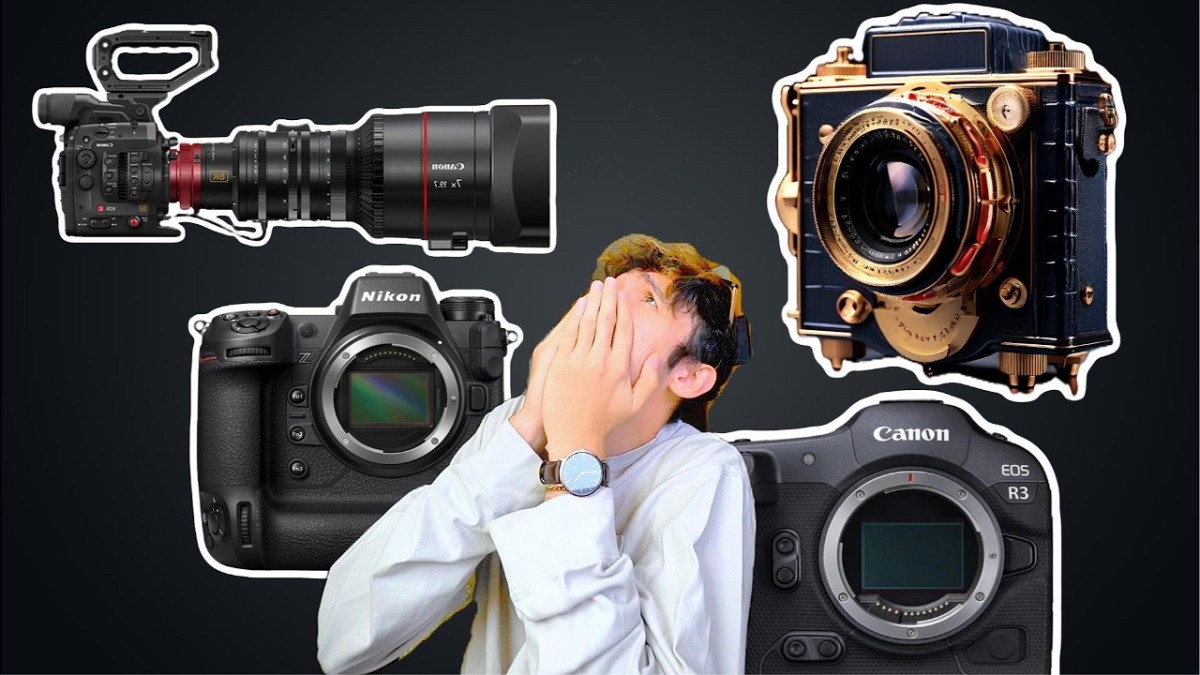
Cameras Make You POOR – Here’s Why (And How to Avoid it)

Photography and videography are amazing hobbies, but they come with a price—literally. Camera gear can easily cost thousands, if not tens of thousands of dollars. But why is that? And more importantly, is there a way to get into cameras without going broke?

In this article, we’ll break down:
Why cameras are so expensive
The smartest ways to save money on camera gear
How to get professional gear without draining your wallet

Let’s dive in.


📸 Why Is Camera Gear So Expensive?

1️⃣ The Audience Is Small and Specialized

Unlike smartphones, which billions of people buy, high-end cameras cater to a tiny market. The fewer buyers there are, the more companies have to charge to make a profit.

Think of it this way:
🔹 iPhones – Almost everyone needs a phone → Lower prices due to mass production
🔹 Cheap cameras – People who want better quality than their phone → Mid-range pricing
🔹 Pro cameras – Semi-pros and serious hobbyists → Higher pricing, but still accessible
🔹 Hollywood-level cameras – Only a handful of people need these → $40K+ price tags

📊 Fewer buyers = Higher prices per unit.


2️⃣ Camera Gear Lasts Too Long (Which Sounds Like a Good Thing, But Isn’t)

Unlike phones, which need upgrades every 2-3 years, a high-quality camera or lens can last a decade or more. This means camera brands can’t rely on frequent upgrades to drive profits, so they charge more upfront.

Think about it:
✅ A Sony A7 III (2018) is still an amazing camera today
✅ A Canon 5D Mark III (2012) is still used by professionals
Lenses last FOREVER – A great 50mm lens from 1990 is still just as good today

💡 Since people don’t upgrade cameras as often as they do phones, companies charge more per sale to make up for lower demand.


3️⃣ New Models Are Released SLOWLY

Unlike the iPhone, which gets a new model every year, cameras and lenses don’t update nearly as fast.

🔹 iPhones → New every 12 months 📅
🔹 Sony Cameras → Every 3-4 years
🔹 Lenses → Sometimes they last 10+ years without a major update 🏆

💰 Fewer releases = Higher prices because brands need to make the most money out of each model.

And guess what? Lenses hold their value even better than cameras. You can buy a lens today, use it for 5 years, and resell it for nearly the same price.


💸 How to Get Into Cameras Without Going Broke

Now that we know why camera gear is expensive, let’s talk about how to get pro-level gear for a fraction of the price.


1️⃣ Buy Used, Not New

Cameras lose value fast. You can save 30-50% by buying last year’s model used instead of new.

Best places to buy used:
eBay – Good deals, but check seller ratings
Adorama / B&H Used – Reputable camera shops
Facebook Marketplace – Local deals can save you a ton
Local camera stores – Many have trade-in programs

📌 Example Savings:
💰 Sony A7 IV New – $2,500
💰 Sony A7 IV Used – $1,800 (Save $700!)

Used cameras work just as well and often come with barely any wear.


2️⃣ Rent Before You Buy

If you only need a high-end lens or camera for a weekend project, rent it instead.

🎥 Places to rent gear cheaply:
LensRentals.com – Huge selection
Local camera shops – Often cheaper than online
Borrow from friends – Best price = FREE

💡 Why spend $3,000 on a lens when you can rent it for $30?


3️⃣ Upgrade Lenses Slowly & Trade Up

Lenses hold their value, which means you can trade up slowly over time.

Here’s a smart way to upgrade:
📷 Start with a $200 used lens
📷 Sell it for $150
📷 Buy a $500 lens with the $150 from the first sale
📷 Sell that later for $400 and buy a $1,000 lens

Over time, you’ll end up with a pro lens without ever dropping $3,000 in one go.


4️⃣ Skip the Camera, Use Your Phone

Smartphone cameras are insanely good now.

🔹 If you’re just starting, an iPhone 15/16 or Samsung S24 Ultra has better image quality than most $500 cameras.
🔹 You can use apps like Filmic Pro to get DSLR-like manual controls.
🔹 The biggest difference is lenses, but for casual use, your phone might be enough.

💡 Before dropping thousands on a camera, ask yourself: Do I REALLY need it?


5️⃣ Don’t Buy Everything at Once

New photographers often think they need:
❌ A $3,000 camera
❌ Five different lenses
❌ A drone
❌ Studio lighting

🚨 Big mistake.

👊 Start small:
✔ Get a used DSLR or mirrorless camera
✔ Pick ONE good lens (like a 50mm f/1.8 for portraits or a 16-35mm for wide shots)
✔ Learn how to use it inside and out
✔ Upgrade only when you actually NEED to

💰 Most beginners waste thousands on gear they don’t even use. Don’t be that person.


💡 Final Thoughts

Cameras are expensive, but they don’t have to make you broke.

Buy used instead of new
Rent lenses for short-term needs
Upgrade slowly by reselling old gear
Use your phone if you don’t really need a camera
Start with one lens and build from there

💡 It’s not about having the best gear—it’s about knowing how to use what you have.


📢 What do you think? Have you ever regretted spending too much on camera gear? Let me know in the comments!

5 Sony Camera Accessories You’re Missing Out On

5 Sony Camera Accessories You’re Missing Out On in 2024

Whether you’re a seasoned photographer or just getting into the world of video, having the right accessories can completely change your experience. If you’re a Sony camera user, especially with the Sony A7C, these five accessories will help you get the most out of your gear. From enhancing your camera’s grip to improving your workflow, these tools are game changers. Let’s dive in!

1. Cage with Grip Extension + Fun Setups

One of the biggest complaints about the Sony A7C is the small grip. That’s where the SmallRig Cage steps in. Not only does it add extra grip for more comfortable handling, but it also gives you endless customization options. You can attach different devices, like a GoPro or another camera, for unique filming angles. The cage is built to securely hold your camera and comes with a magnetized tool to easily tighten any screws. It’s perfect for vloggers, photographers, or anyone who needs versatility in their shooting setup.
Get it here

2. Budget Batteries + Charger

If you’ve ever found yourself in the middle of a shoot with a dead battery, you know how crucial it is to have backups. Instead of splurging on expensive Sony-brand batteries, consider budget-friendly options like the RAVPower charger and battery set. It’s cheaper, just as reliable, and compatible with both off-brand and original Sony batteries. This set includes two batteries and a charger, allowing you to keep your camera powered up without breaking the bank.
Check them out

3. PeakDesign Straps

Say goodbye to the traditional camera strap that’s always getting in your way. The PeakDesign camera strap offers a quick-release system that allows you to attach or detach the strap in seconds. It’s perfect for those who need to transition from hand-held shooting to tripod use without fussing over tangled straps. The lightweight, sturdy design ensures your camera stays secure, while also being comfortable to wear for long periods.
Buy it here

4. Quick Release Plates

If you’re constantly switching between tripods, monopods, or handheld shooting, quick release plates are a lifesaver. These plates are simple to attach and allow you to quickly mount your camera to various equipment without constantly screwing and unscrewing. For only $12 each, they are affordable and essential for anyone looking to speed up their workflow. Simply attach the plate to your camera, and you’re ready to switch between setups effortlessly.
Grab yours here

5. Secretly the Best SD/MicroSD Cards

When it comes to SD cards, most people assume they need the most expensive, high-speed options. However, unless you’re shooting fast-action sports in RAW, standard SD cards work just as well. The Samsung SD cards offer exceptional reliability, affordability, and versatility. They can be used across different devices—from your Sony camera to a GoPro or drone. At around $10-$12, these cards are an incredible value and have never failed in five years of use.
Get them here

Final Thoughts

These five Sony camera accessories are perfect for anyone looking to enhance their photography or videography experience. They provide functionality, flexibility, and efficiency, all without breaking the bank. Feel free to check out any of those affiliate links above to check em out or see similar products. Have any other accessories you swear by? Drop them in the comments and share your setup tips!